House Edge by Game: Where the Casino Makes Its Money

Every casino game is built around one number, and most players never look at it. The house edge is the slice the casino keeps, on average, from every bet you place. It’s not a fee you see at the till. It’s baked into the rules, the payouts, and the odds, so quietly that you can play for years without ever clocking how it differs from game to game.

Once you can read that number, the whole floor looks different. You stop asking “which game is lucky” and start asking “which game costs me least per hour.” That’s the only question that actually matters.

What house edge means in plain terms

House edge is the percentage of each wager the casino expects to retain over the long run. A 1 percent edge means that, on average, for every £100 you bet, the casino keeps £1 and returns £99. You won’t see this on any single spin or hand — short-term swings dwarf it — but over thousands of bets it’s as reliable as gravity.

The flip side of house edge is return to player, or RTP. A game with a 4 percent house edge has a 96 percent RTP. Same fact, two ways of saying it.

The edge varies wildly by game

Here’s the part most people don’t realise: the difference between the best and worst bets in a casino is enormous. Below are typical figures for common games under standard rules. Exact numbers shift with the specific rules and your choices, but the ranking holds up almost everywhere.

Game Typical house edge Notes
Blackjack (basic strategy) 0.5% – 1% Among the lowest, *if* you play correctly
Baccarat (banker bet) ~1.06% One of the best single bets in the house
Craps (pass / don’t pass) ~1.4% Cheap if you stick to the simple line bets
European roulette ~2.7% Single zero
American roulette ~5.26% Double zero nearly doubles the edge
Slots 2% – 12% Hugely variable, often hidden
Keno 20% – 30% Among the worst bets on the floor

Look at roulette alone. Switching from the American wheel (two green pockets) to the European wheel (one) cuts the edge roughly in half — same game, same bets, but one rule changes everything. That single green pocket is the whole difference.

Why the numbers are so different

A few forces drive the spread:

Player skill. Blackjack’s low edge only exists if you play basic strategy — the mathematically correct move for every hand. Play on instinct and the real edge against you climbs well above the textbook figure. Games with no decisions, like slots or keno, give you no way to improve your odds; the edge is fixed by the maths.

Payout shaving. Casinos build the edge into how they pay winners. In roulette, the true odds of hitting a single number are 37 to 1 on a European wheel, but the casino pays 35 to 1. That two-unit gap *is* the edge. Slots do the same thing invisibly, through the size and frequency of their payouts.

Bet complexity. The flashy, high-payout bets — the centre of a craps table, side bets in blackjack, most keno tickets — carry far worse edges than the plain options. The bigger the advertised jackpot, the worse the underlying odds usually are.

Transparency. Table games have published, checkable odds. Slot machines don’t show you their RTP on the glass, which is exactly why their edge varies so much and skews higher. Independent auditors such as eCOGRA test and certify the payout percentages of licensed online games precisely because players can’t verify them by eye (ecogra.org).

What the edge actually costs you per hour

House edge alone doesn’t tell the full story — speed does too. A game with a low edge played very fast can cost more than a high-edge game played slowly. What matters is edge multiplied by how much you wager per hour.

Roughly: bet £10 a hand at blackjack, play 60 hands an hour with a 0.5 percent edge, and you’re risking about £3 an hour on average. Feed £2 spins into a slot at 600 spins an hour with an 8 percent edge, and the expected cost is around £96 an hour. Same evening, vastly different price tag. The slot isn’t “unlucky” — it’s just expensive by design.

The house edge isn’t the casino cheating you. It’s the price of admission, printed in maths instead of pounds. The mistake is paying a premium price without knowing you’re doing it.

Reading a floor like an operator

If you want your bankroll to last, the priorities follow straight from the table:

  • Favour low-edge games with decisions — blackjack with basic strategy, baccarer’s banker bet, the pass line in craps.
  • Pick European roulette over American every single time it’s offered.
  • Treat slots as paid entertainment, not a value play. They’re fun and fast, but the edge is higher and the speed multiplies it.
  • Avoid the worst bets — keno, most side bets, long-shot proposition bets. The payouts look exciting because the odds behind them are bad.

None of this turns a casino game into a winning proposition. Over enough bets, the edge wins; that’s the whole business model, and it’s why the industry is profitable and regulated. The point is to spend your entertainment budget on the cheapest seats rather than the most expensive ones, and to know the price before you sit down.

Bodies like the Gambling Commission publish the rules these games operate under in Britain (gamblingcommission.gov.uk), and if play ever stops feeling like entertainment and starts feeling like chasing, free support is available through GamCare (gamcare.org.uk). The edge is fixed. How much you expose yourself to it is the one part that’s entirely yours to control.

Review Update Cycles: Keeping Casino Assessments Current and Relevant

Introduction

In the fast-paced world of online gambling, platforms evolve rapidly. Casinos update bonuses, change payment providers, improve mobile apps, or undergo licensing changes—all within short spans. That’s why maintaining accurate and up-to-date casino reviews is essential. Review update cycles ensure that players receive current, relevant information when choosing where to deposit real money. This article explores the importance of update cycles, how they work, and why they’re critical for global users.


1. Why Timely Updates Matter

A. Industry Fluidity

Online casinos frequently adjust features like:

  • Welcome offers and promotions
  • Withdrawal limits or processing speeds
  • Software providers and game libraries
  • Licensing jurisdiction and compliance status

Without updates, even a well-researched review can become outdated and misleading within months.

B. Player Safety

Updated reviews alert players to:

  • License revocations or regulator warnings
  • Complaints related to payments or fairness
  • Terms and conditions that change overnight

C. SEO & Credibility

Search engines favor fresh content. Regularly updated reviews enhance organic visibility and reinforce the publisher’s authority in the industry.


2. What Should Trigger a Review Update?

Trigger EventExample
Bonus RevisionNew deposit match offer or change in wagering terms
Payment ChangeAddition/removal of PayPal, crypto, or payout delays
License AlterationGain or loss of UKGC, MGA, or local certifications
Major ComplaintsVerified user reports of fraud or unfair play
Game Library ShiftAddition of live dealers or removal of major providers
Tech UpdatesNew mobile app release or site redesign

3. Recommended Review Update Frequency

Review TierUpdate Cycle
Tier 1 (Top-Ranking Casinos)Every 30–45 days
Tier 2 (Mid-Traffic Brands)Every 60–90 days
Tier 3 (Archived or Inactive Casinos)Bi-annually or upon news trigger

Top-tier casinos with high traffic and changing offerings require frequent reviews. Lesser-known brands may need updates only after key changes or scheduled check-ins.


4. The Update Process: Step-by-Step

  1. Monitor Change Signals
    • Subscribe to casino newsletters, affiliate alerts, and regulator updates.
  2. Verify Internally
    • Log in, navigate the platform, check promotions and payment options firsthand.
  3. Test Core Functions
    • Deposit, play, and withdraw to validate operational integrity.
  4. Reassess Key Metrics
    • Adjust ratings if user experience, support, or speed has changed.
  5. Document Changes
    • Add “Last Updated” tags, changelogs, or highlight modifications in review.
  6. Notify Audiences
    • Use social channels, newsletters, or platform banners to alert readers of major updates.

5. Transparency in Update Practices

To ensure user trust, publishers should:

  • Include a visible “Last Reviewed” date on each article.
  • Publish brief changelogs noting what was updated.
  • Differentiate between full reviews vs. quick refreshes.

This reinforces integrity and empowers readers to make informed decisions.


6. Tools & Techniques for Efficient Updates

  • Automated Alerts: Track casino URL changes, license databases, and T&C updates.
  • CMS Scheduling: Set automated review reminders via editorial calendars.
  • Data Integrations: Use APIs to auto-fetch bonus or provider changes.
  • Crowd Feedback: Allow user-submitted reports or ratings to flag needed reviews.

7. Benefits to Users Worldwide

  • Better Bonus Choices: Users won’t fall for expired or misleading promotions.
  • Current Legal Clarity: Jurisdictional rules and licensing are accurate.
  • Reliable Payout Expectations: Updated payment speeds and limits reflect reality.
  • Mobile Compatibility: Readers know which platforms support their devices today—not a year ago.

Conclusion

In the dynamic world of online casinos, review update cycles are not optional—they are a necessity. Timely updates ensure that assessments reflect reality, enhance player trust, and support compliance with industry standards. For users worldwide, staying informed through current reviews means safer play, smarter decisions, and fewer surprises. Platforms and publishers that prioritize fresh, accurate content not only serve their audience better—they lead the industry in credibility.

Real Money Testing in Casino Reviews: Behind the Scenes of Platform Evaluation

Introduction

In the competitive world of online gambling, trust is everything. With countless platforms promising top-tier experiences, professional casino reviewers have turned to real money testing to provide players with honest, hands-on insights. Unlike surface-level reviews or promotional content, this approach involves depositing and wagering actual funds—mirroring the real player journey. This article explores the mechanics, benefits, and importance of real money testing in casino reviews for global audiences.


1. What Is Real Money Testing?

Real money testing refers to the practice of reviewers registering at a casino, making a deposit with their own funds, and playing games under real conditions. This process includes:

  • Creating a verified account.
  • Depositing money via standard methods (credit card, e-wallets, crypto).
  • Playing a variety of games (slots, live casino, tables).
  • Requesting withdrawals.
  • Documenting the full user experience.

Unlike demo play or theoretical audits, this methodology replicates what genuine players experience from sign-up to cash-out.


2. Why Real Money Testing Matters

A. Unbiased Results

Using personal funds removes the influence of affiliate promotions or demo-mode bias. Reviewers can report issues exactly as they happen.

B. Full Player Journey Coverage

It ensures analysis goes beyond the game lobby—capturing KYC delays, payment speed, bonus restrictions, and support responsiveness.

C. Enhanced Credibility

Audiences are more likely to trust reviews backed by transparent, real-world testing procedures.

D. Platform Accountability

Operators are more cautious and performance-driven knowing that reviewers can publicly report real flaws or strengths.


3. Key Components Evaluated During Real Money Testing

AreaWhat’s Tested
RegistrationEase, verification steps, KYC requirements
Deposit ProcessSpeed, available methods, transaction security
Bonus ActivationTransparency of terms, automatic vs. manual claim
Game ExperienceLoad times, graphics, mobile responsiveness, fairness
Support InteractionsLive chat response time, accuracy, availability
WithdrawalSpeed, limits, reverse withdrawal policies, fees

4. Common Issues Detected Through Real Testing

  • Delayed Withdrawals: Some casinos advertise 24-hour payouts but take several days.
  • Hidden Bonus Terms: Unclear wagering requirements or excluded games.
  • Unresponsive Support: Chat systems that loop or fail to resolve issues.
  • Mobile Glitches: Apps that crash or games that lag on smaller devices.
  • Verification Roadblocks: Unexpected ID rejections or long approval times.

Real money testing brings these problems to light, helping players avoid frustrating or risky platforms.


5. Best Practices for Reviewers Conducting Real Money Tests

  • Use Multiple Devices: Test desktop, Android, and iOS for comprehensive UX.
  • Time Critical Actions: Log timestamps for deposits, withdrawals, and chat replies.
  • Screenshot Everything: Provide visual proof for claims or issues.
  • Stay Anonymous: Avoid alerting casinos that a test is in progress.
  • Withdraw Winnings: Even small withdrawals help measure reliability.
  • Track Communications: Save emails, chat transcripts, and error logs.

6. Transparency & Ethics in Testing

Trustworthy reviewers disclose their testing process openly. Ethical standards include:

  • Declaring Funding Source: Clarify whether funds are reviewer-owned.
  • No Preferential Treatment: Avoid VIP accounts or custom testing perks.
  • Public Documentation: Offer proof where possible (screenshots, test logs).
  • Objective Reporting: Share both strengths and weaknesses equally.

7. How Readers Benefit

Real money testing delivers real value for players by:

  • Reducing exposure to fraudulent or underperforming casinos.
  • Clarifying which bonuses and games are truly rewarding.
  • Showing actual withdrawal times and procedures.
  • Verifying which platforms honor advertised promises.

Ultimately, it empowers users to make informed decisions based on live conditions, not marketing hype.


8. Conclusion

In an industry where marketing claims often overshadow reality, real money testing offers an unfiltered look into how online casinos truly operate. By replicating the real user journey, reviewers provide players with unmatched insight into platform performance, reliability, and fairness. As more players demand transparency and proof, real money testing is not just a best practice—it’s a necessity in modern casino reviews.

Casino Review Methodology: How Experts Evaluate Gaming Platforms

Introduction

Expert casino reviews guide players through the global online gambling landscape—an industry expected to reach $78 billion in 2024. Rigorous, data-driven methodologies ensure accuracy, transparency, and player safety. This article unveils the proven frameworks and techniques experts rely on to deliver trustworthy evaluations of gaming platforms.


1. Core Principles Behind Expert Reviews

Professional reviewers adhere to key principles:

  • Independence & Transparency: Disclose affiliations and clearly outline evaluation methods.
  • Comprehensive Scope: Cover licensing, security, game quality, banking, UX, support, and responsible gaming.
  • Data-Centric Analysis: Deploy real-world testing and analytics—measure withdrawal times, load speeds, and security.
  • Weighted Scoring: Apply multi-criteria frameworks to assign objective ratings.

2. Rounded Evaluation Criteria

Licensing & Security

Check for reputable regulatory oversight (e.g., UKGC, MGA, Kahnawake), SSL encryption, RNG certification, and third-party audits.

Game Selection & Software Providers

Assess variety and quality: include top-tier studios (NetEnt, Microgaming, Evolution).

Bonuses & Terms

Evaluate bonus value, wagering requirements, clarity, and fairness.

Payment Options & Payout Speed

Test deposit/withdrawal methods, typical timelines, and associated fees.

Mobile Experience & User Interface

Evaluate app performance, layout, and responsiveness across mobile devices.

Customer Support

Gauge professionalism, responsiveness, and availability across channels—live chat, email, phone.

Responsible Gambling Tools

Check availability of deposit limits, self-exclusion, and links to help organizations.


3. The Step-by-Step Review Process

  1. Registration & KYC Testing
    Experts sign up, verify IDs, and inspect account setup friction.
  2. Live Testing with Real Funds
    Deposit genuine money, play across different games, and initiate withdrawals.
  3. Data Collection
    Track withdrawal time, support response metrics, and mobile load performance.
  4. Cross-Verification
    Confirm licensing on regulator sites and validate data with independent certificates.
  5. Weighted Scoring Application
    Assign numerical weights to criteria based on importance; calculate a final rating.
  6. Regular Updates
    Periodically re-evaluate as platforms change their offerings or technology.

4. Understanding Weighted Scoring

Ratings rely on weighted scoring models:

  • Define criteria and importance weight (e.g., security = 25%, games = 20%).
  • Score each casino per category.
  • Multiply weight × score and sum for an overall rating.

This offers a fair, bias-minimized ranking.


5. Real-World Examples

  • TalkSPORT evaluates casinos using 8 factors (licensing, safety, banking, games, bonuses, support, mobile, responsible gambling) with weighted impact per factor.
  • The Sun’s “Sun Factor” mandates UKGC license, SSL, clear T&Cs, KYC processes, then scores on mobile, security, game variety, payments, promotions, and responsible tools.

6. The Role of Data Analytics

Modern reviews leverage analytics to:

  • Monitor security vulnerabilities and audit logs.
  • Predict future performance via predictive modeling.
  • Promote transparency—blockchain-based metrics and real-time analytics.

7. Best Practices for Review Integrity

  • Declare Affiliations: Clearly list any commercial ties.
  • Use Real Data: Report measured metrics, not just perceptions.
  • Frequent Re-Testing: Ensure info matches current site status.
  • Prioritize Player Needs: Focus on what users value—safety, speed, fairness.

8. How to Choose Trustworthy Reviews

  • Confirm reviewers tested the site live.
  • Look for transparency in scoring systems.
  • Check inclusion of regulator seals (eCOGRA, MGA, UKGC).
  • Prefer reviews displaying last-updated dates.
  • Cross-check details across multiple reputable sources.

Conclusion

A rigorous casino review methodology hinges on transparency, data-driven analysis, and weighted scoring, ensuring accurate and trustworthy recommendations. As the global iGaming space expands—expected at $78 billion+—professional reviews remain essential for guiding players, driving industry standards, and fostering trust between platforms and users.

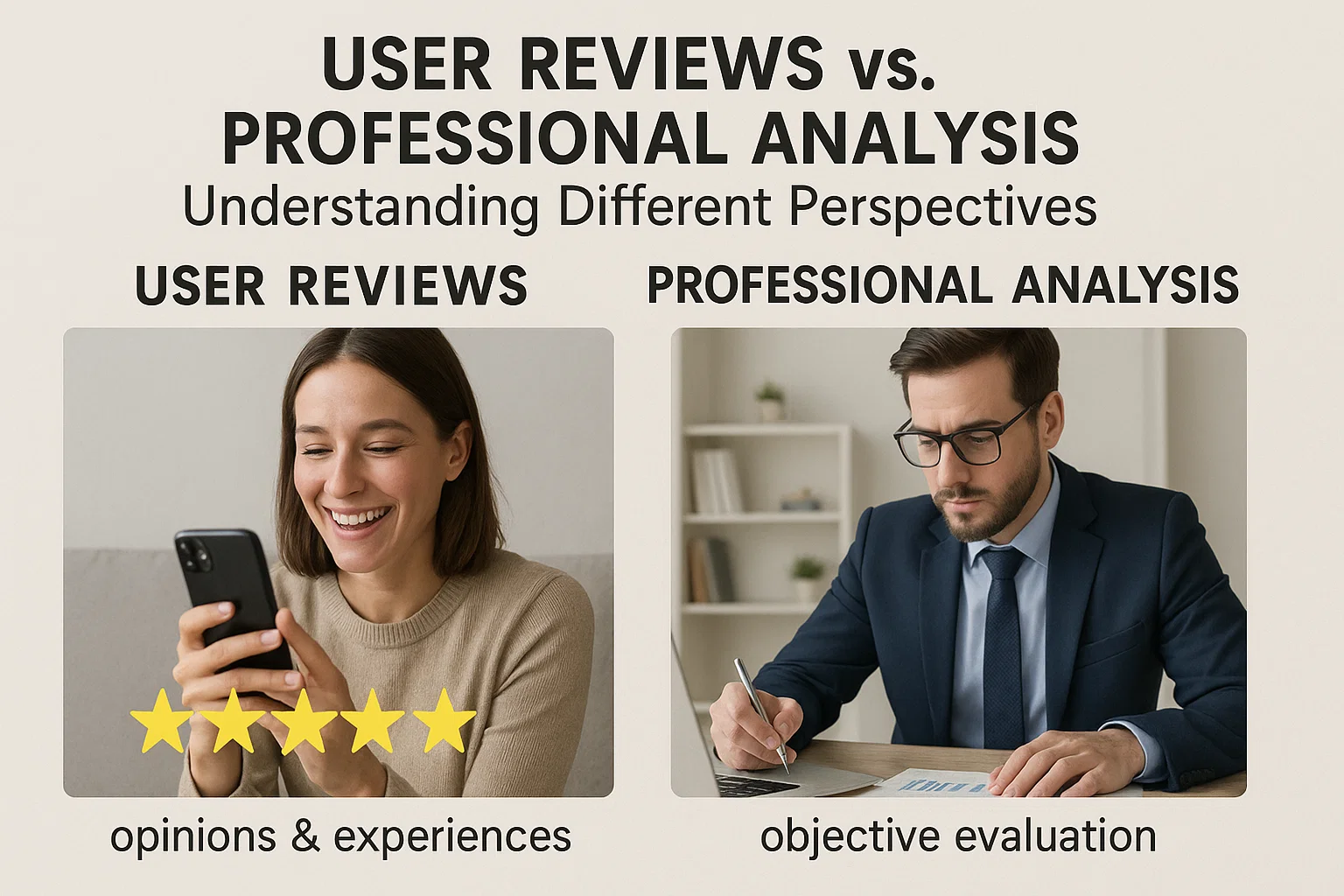
User Reviews vs Professional Analysis: Understanding Different Perspectives

Introduction

In the ever-expanding online gambling ecosystem, players rely on two primary sources of insight when choosing a casino: user reviews and professional analysis. While both serve valuable roles, their intent, methodology, and reliability can differ significantly. Understanding these perspectives is essential for players seeking fair, safe, and enjoyable gaming experiences. This article explores the strengths and limitations of user-generated content versus expert evaluation to help users make more informed decisions.


1. The Role of User Reviews

User reviews are firsthand accounts from players who have interacted with a platform. These opinions offer:

  • Authentic Experiences: Users share personal wins, losses, and impressions of gameplay, payments, and support.
  • Real-Time Reactions: These reviews often reflect recent changes, including bonus updates or bugs.
  • Emotional Context: They provide subjective insight into how a platform feels during play.

Pros

  • Highlight issues not found in official reviews (e.g., sudden withdrawal delays).
  • Reflect unfiltered sentiment and collective voice of the community.
  • Easily accessible through forums, app stores, or review platforms.

Cons

  • Bias and Extremes: Highly positive or negative experiences may dominate.
  • Lack of Structure: Limited context, inconsistencies, or unsupported claims.
  • Fake Reviews: Some platforms use bots or incentives to inflate scores.

2. The Role of Professional Analysis

Professional casino reviews are crafted by industry experts using structured methodologies. These evaluations include:

  • Regulatory and Licensing Checks
  • Security and Encryption Analysis
  • Testing of Deposit/Withdrawal Systems
  • Game Library Review (including RTP & RNG validation)
  • Customer Support Evaluation
  • Bonus Terms & Conditions Breakdown

Pros

  • Objective and repeatable criteria ensure fair comparisons.
  • Backed by live testing and data collection.
  • Updates occur regularly to reflect changes in platform behavior or offerings.

Cons

  • May not reflect niche user scenarios.
  • Sometimes limited to affiliate-driven platforms.
  • Can miss short-term performance issues between audits.

3. Key Differences at a Glance

AspectUser ReviewsProfessional Analysis
PerspectiveSubjectiveObjective
SourcePlayersExperts
DepthPersonal ExperienceComprehensive Audit
ConsistencyVariesStructured & Repeatable
VerificationRareVerified through testing
Update FrequencyContinuousScheduled Intervals

4. When to Rely on Each

Rely on User Reviews When:

  • Checking real-time platform performance.
  • Exploring niche use cases (e.g., crypto payments, VIP tiers).
  • Gauging general sentiment on fairness or treatment.

Rely on Professional Reviews When:

  • Verifying licenses, security protocols, and regulatory compliance.
  • Comparing platforms across features (games, bonuses, support).
  • Seeking accurate details on payout speeds or terms & conditions.

5. The Best Approach: Use Both Together

For a balanced perspective:

  1. Start with Expert Reviews: Use them to verify legitimacy, evaluate game libraries, and understand bonus terms.
  2. Cross-Reference with User Reviews: Look for recent comments on performance issues, payouts, or support.
  3. Spot Patterns: If many users report the same issue missed by professionals, it’s worth noting.
  4. Use Trusted Sources: Whether expert or user, credibility of the platform matters.

6. Ensuring Trust in Both

  • For User Reviews:
    • Check volume and recency.
    • Be cautious of overly emotional or vague entries.
    • Use platforms that allow verified user submissions.
  • For Professional Reviews:
    • Look for disclosed methodology.
    • Confirm real testing (e.g., deposit/withdrawal logs).
    • Validate independence (avoid overly promotional tone).

Conclusion

User reviews and professional analysis each offer valuable, distinct insights into online gambling platforms. User reviews bring raw, emotional, on-the-ground perspectives, while expert evaluations offer structured, data-driven objectivity. By combining both viewpoints, players can make confident, well-rounded decisions that align with their personal needs and risk tolerance in the ever-evolving world of online gaming.

Best Online Casino Reviews: The Importance of Professional Gaming Platform Analysis

Introduction

In today’s booming online gambling industry—projected to reach over $78 billion in 2024 and forecasted to exceed $153 billion by 2030—choosing a reputable casino isn’t optional; it’s essential. For worldwide players, professional best online casino reviews serve as trusted guides, offering expert analysis on platforms that could otherwise be overwhelming. This article explores why thorough professional reviews matter and how they benefit both players and the industry.


Why Professional Casino Reviews Matter

1. Build Trust & Reputation

Player trust hinges on transparency. Reviews that analyze licensing, security, and payout reliability directly reinforce consumer confidence.

2. Inform Smarter Decisions

Experts evaluate crucial metrics—game variety, bonuses, banking, support—and present them clearly, empowering players to choose platforms suited to their needs.

3. Screen Out Risk

Professional scrutiny helps expose rogue operators lacking proper licensing, employing unfair terms, or offering insecure infrastructure.

4. Raise Industry Standards

Consistent, data-driven reviews push platforms to improve security, fairness, and transparency—benefitting all players.


What Defines a High-Quality Casino Review?

A truly professional review includes:

  1. Expertise & Transparency
    Analysts disclose involvement, operate independently, and detail their methods.
  2. Deep-Dive Analysis
    Evaluation spans software, mobile compatibility, security, bonuses, fairness, banking, and support.
  3. Data & Analytics-Based Approach
    Reviews increasingly use data and analytics to validate claims—checking actual withdrawal times, licensing status, game labs.
  4. Reliable Rating Frameworks
    Structured systems—like weighted scoring or editorial factor models—ensure objective and comparable assessments.

Key Metrics in Professional Analysis

Licensing & Security

Verify jurisdictions (UKGC, MGA, Kahnawake) and encryption standards—SSL, RNG certification, eCOGRA seals.

Game Selection & Software Providers

Coverage of top providers (NetEnt, Microgaming, Evolution) and diversity—slots, live dealer games, table games.

Bonuses & T&Cs

Assess bonus amounts, wagering requirements, fairness, and clarity.

Payment & Payout Speed

Analyze deposit/withdrawal times, fees, and payment methods—including cards, e-wallets, crypto.

Mobile Experience

Evaluate app functionality, mobile browser performance, and speed.

Customer Support

Test availability, responsiveness, and issue resolution across channels.

Responsible Gambling Tools

Assess self-exclusion options, deposit limits, and access to help.


The Review Process: From Behind the Scenes

Professional review sites follow detailed methodologies:

  • Live Testing
    Reviewers actively register, deposit, play, and withdraw real funds to test processes.
  • Data Collection
    Exact data measurement—withdrawal times, support wait times, mobile load speeds.
  • Cross‑Verification
    Facts checked against certificates, license registers, and commissions.
  • Regular Updates
    Frequent re-evaluation ensures accuracy as platforms change or updates occur.

Case Example – Structured Review Frameworks

Some outlets apply weighted evaluation—combining licensing, security, UX, payments, game library, support, and responsible gambling—for credible, ranked reviews tailored to specific markets.


Market Impact & User Behavior

  • Immersive Influence: Reviews serve as decision gateways in the user journey.
  • Industry Trust: Over 70% of consumers trust online reviews—second only to personal recommendations.
  • Industry Growth Link: As markets scale (e.g., US legalization, mobile adoption), credible reviews are essential.

Best Practices for Reviewers

  • Disclose Affiliations
    Declare any affiliate or sponsorship relationships.
  • Use Transparent Scoring
    Display criteria and weights clearly to readers.
  • Rely on Real Data
    Use measurable statistics—not just opinions—to build trust.
  • Refresh Regularly
    Review periodically to reflect promotions, security patches, or UX updates.
  • Focus on Users
    Highlight what players value: safety, speed, fairness.

Tips for Readers: Choosing Reviews You Can Trust

  • Confirm licensing information and security credentials.
  • Verify that reviewers personally tested the site.
  • Cross-reference multiple sources for consistency.
  • Inspect bonus terms, wagering conditions, and paytimes.
  • Ensure independent oversight—eCOGRA, MGA, UKGC seals.
  • Review for updated content (last reviewed date).

Conclusion

In a global online gambling landscape exceeding $78–100 billion annually, relying on professional casino reviews isn’t indulgent—it’s necessary. These in-depth, data-backed analyses help players choose safe, fair, and enjoyable platforms, while promoting industry integrity. As the market expands, trusting authoritative reviews ensures informed decision-making—for players and operators alike.